19:42
Evening primrose
Oenothera biennis
Opens in minutes, not hours
Opening now
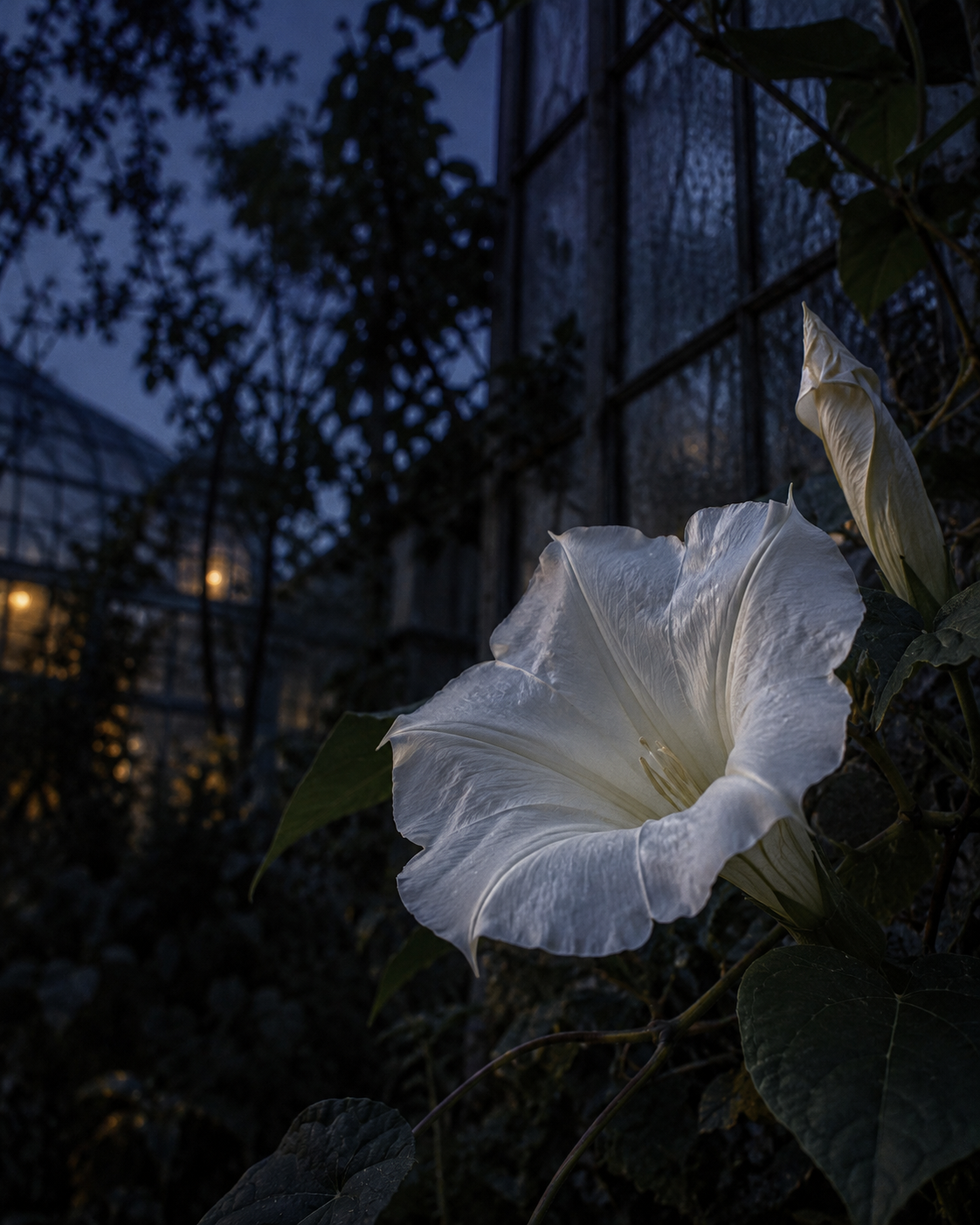
Vesper is a field guide for the hours most gardens forget—following scent, moths, and pale petals from last light to first dew.
51.5072° N
0.1276° W
The night watch · October 04
A small observatory for flowers that keep different hours. Times are approximate; weather, temperature, and a plant’s own temperament still have the final word.
Evening primrose
Oenothera biennis
Opens in minutes, not hours
Moonflower
Ipomoea alba
A pale beacon for night moths
Night phlox
Zaluzianskya capensis
Honey and vanilla after dark
A practical almanac
Bring a chair, dim the torch, and arrive twenty minutes early. The reward is less spectacle than attention—the tiny crackle of a world changing state.
Warm, windless nights give petals time to unfold without bruising.
Red light disturbs fewer pollinators and preserves your night vision.
Hawk moths may find the bloom before you do; their flight is part of the event.
Observer’s note · 21:26
“The flower did not bloom so much as exhale.”
From the field notebook
Color recedes. Scent becomes architecture. White petals act as landing lights, drawing long-tongued moths across distances we can’t see.
Read the first entry